Repairs start with a $150 service call, which covers diagnosis and the first hour of labour and goes toward the work. Leak detection is priced separately as a flat rate. From there most equipment repairs land between $150 and $1,500, while structural work such as resurfacing starts around $4,000. You get a firm number before any work begins.



CALL US NOW!
817-779-8006
CALL US NOW!
817-779-8006
Pool Repair Services
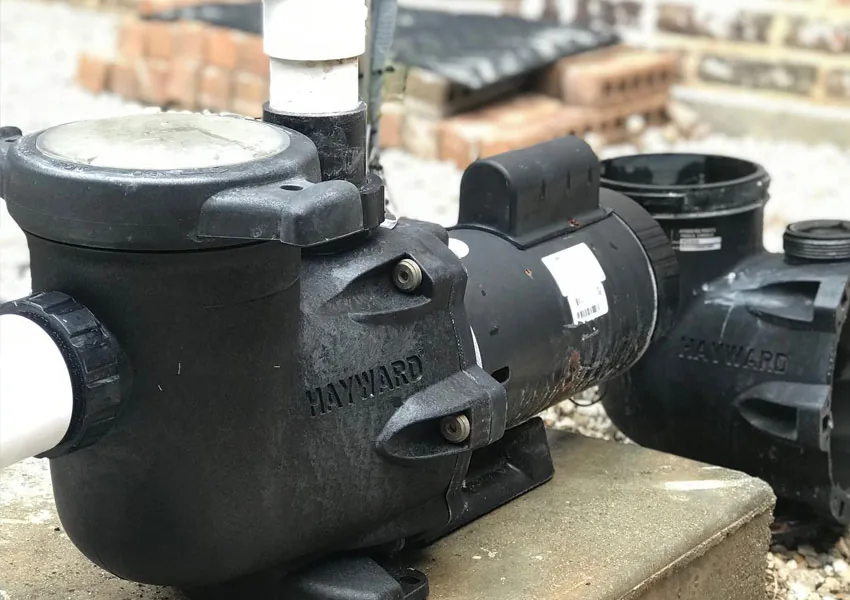
Pool Pump Problems
The pump is the one piece of equipment that everything else depends on. When it stops, circulation stops, and a clear pool can turn green in a couple of warm days. A grinding or humming motor, a basket that will not fill, air bubbles at the returns, or water pooling under the pad all point to something specific. See Pool Pump Repair for what each of those symptoms usually means.
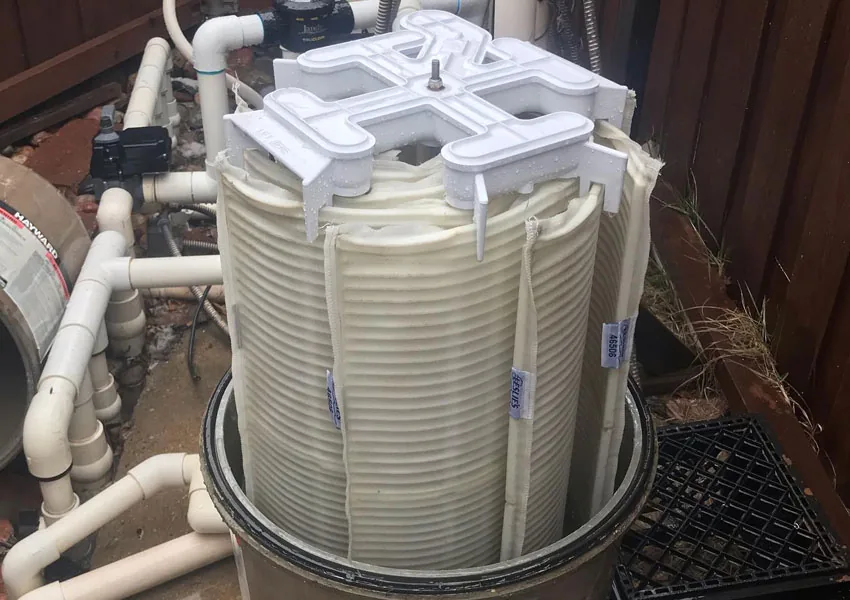
Pool Filter Problems
A filter that needs attention shows up in your water before it shows up on the equipment pad. Cloudy water that will not clear, pressure climbing on the gauge, or backwashing far more often than you used to are all signs. Cracked grids and torn cartridges also push debris straight back into the pool. See Pool Filter Repair for how we find which one it is.
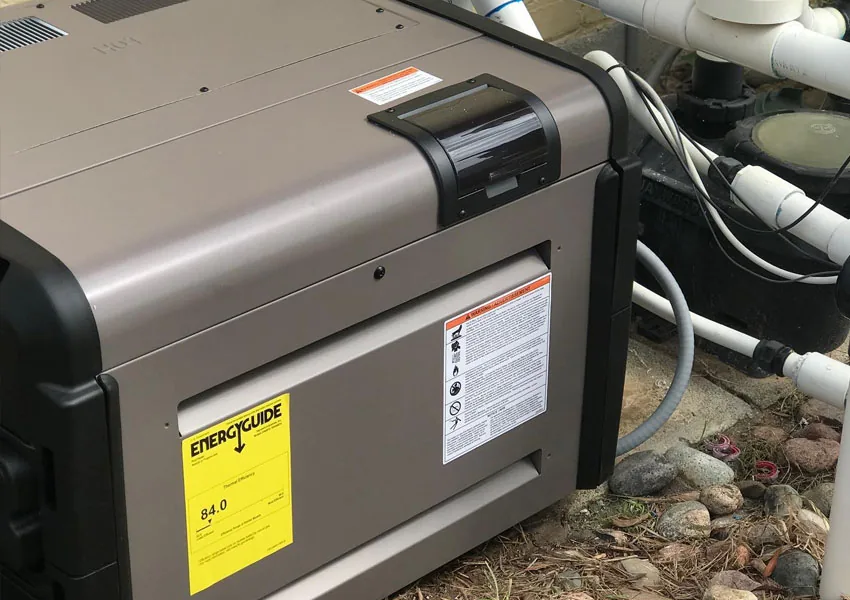
Pool Heater Problems
Heaters rarely quit without warning. The unit short cycles, throws an error code, will not fire at all, or heats far more slowly than it used to. Because heaters combine gas, electricity, and water, a heater behaving strangely is one to stop using until someone looks at it. See Pool Heater Repair for the faults we see most often and which ones are worth repairing.
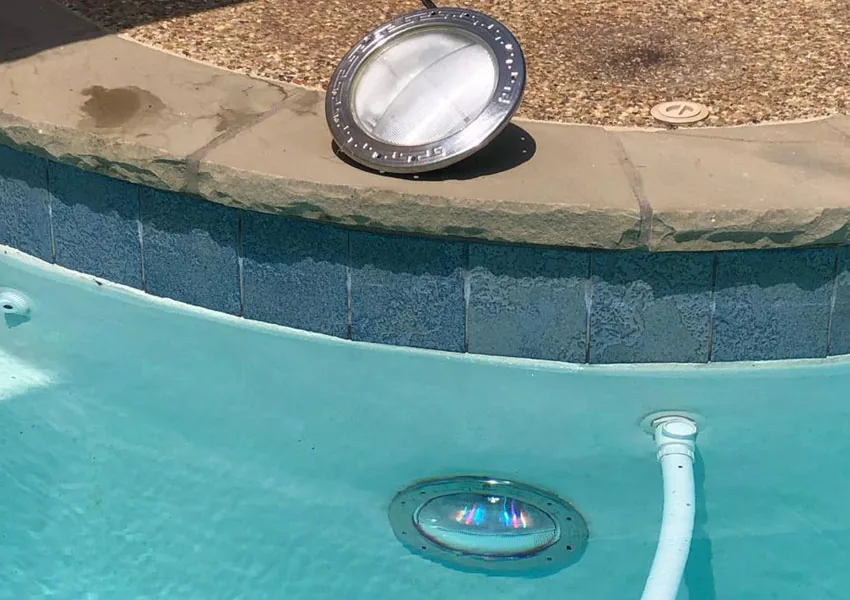
Pool Light Problems
A pool light that does not work is a safety problem before it is an inconvenience. Sometimes it is the bulb. Often it is the transformer, the GFCI, a corroded fixture, or water that has found its way into the niche. Because it is water and electricity together, this is not a good one to test yourself. See Pool Light Repair for how we diagnose it safely and what an LED upgrade involves.
Pool Leak Problems
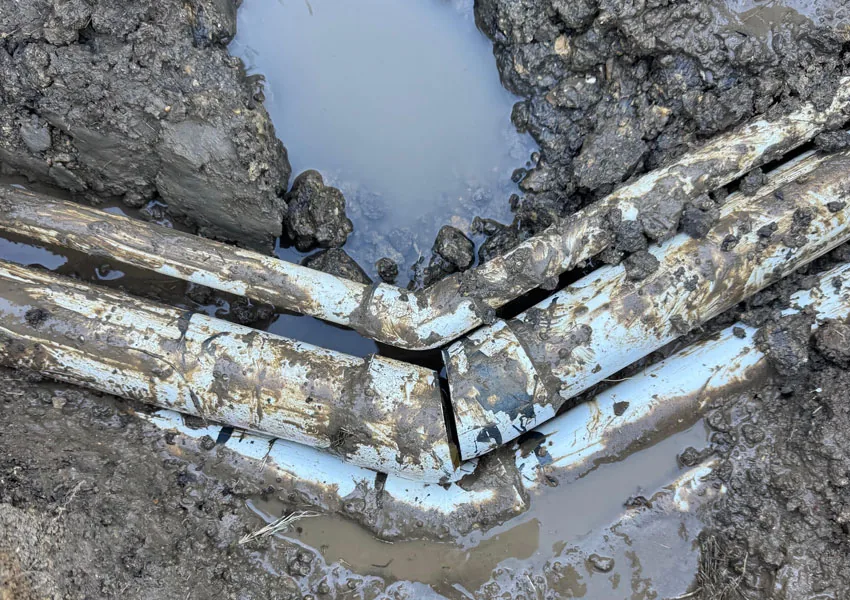
Every pool loses a little water to evaporation. What you are looking for is loss that outpaces the weather. An autofill that runs constantly, a water line that drops overnight, wet ground near the pad, or a chemical balance you can never hold are the usual signs. Guessing gets expensive fast. See Pool Leak Detection for how we locate a leak before anything gets dug up.
Pool Plumbing Problems
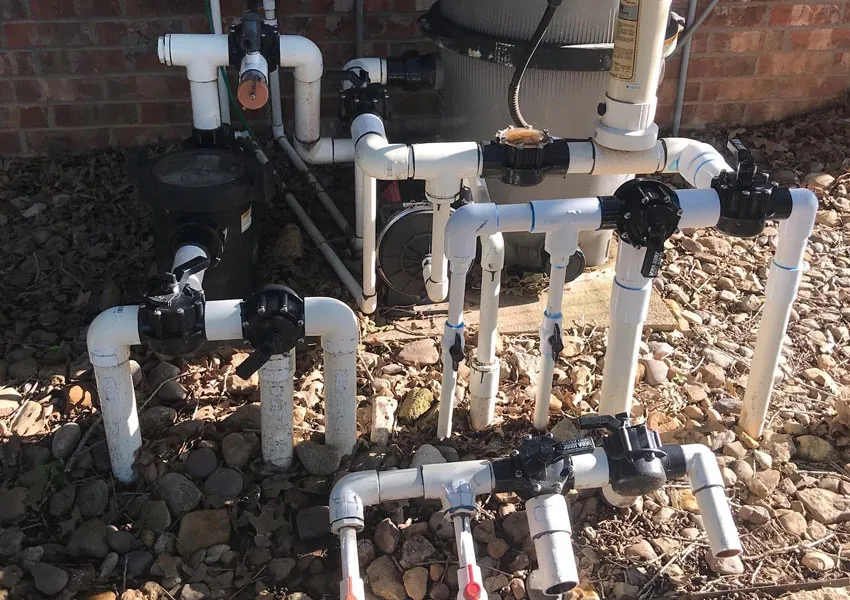
Underground plumbing problems are easy to mistake for something else. Weak returns, air in the system, a pump that loses prime, or a valve that no longer diverts water usually trace back to the lines rather than the equipment. North Texas clay moves with the seasons, and it moves pipe with it. See Pool Plumbing Repair for how we test the lines and what a repair usually involves.
Salt System Problems
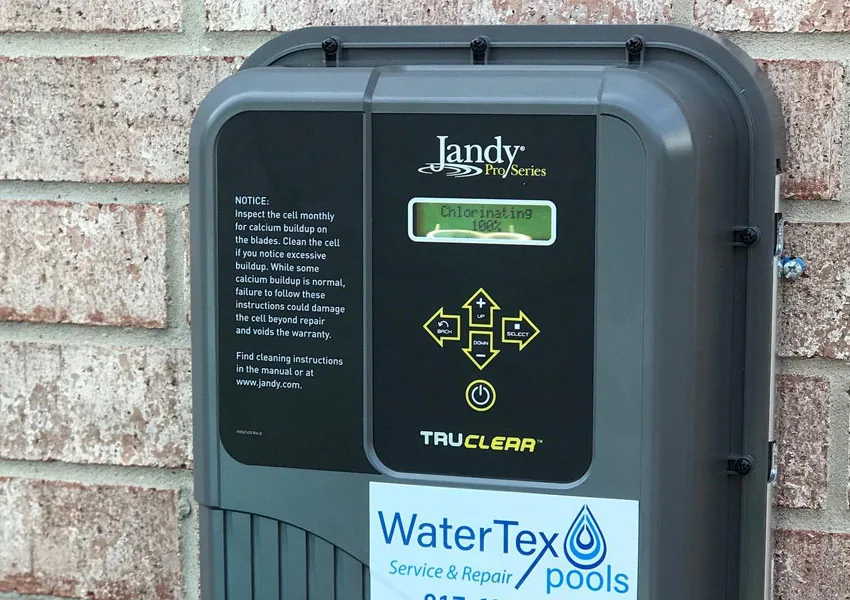
Salt systems are low maintenance until the cell stops producing. You will usually notice chlorine dropping while the system still reports normal, a scaled or discolored cell, a low salt warning that a bag of salt does not solve, or a control board that will not hold settings. Cells also simply wear out. See Salt Water Pool System Repair for how we tell a worn cell from a system fault.
Pool Automation Problems
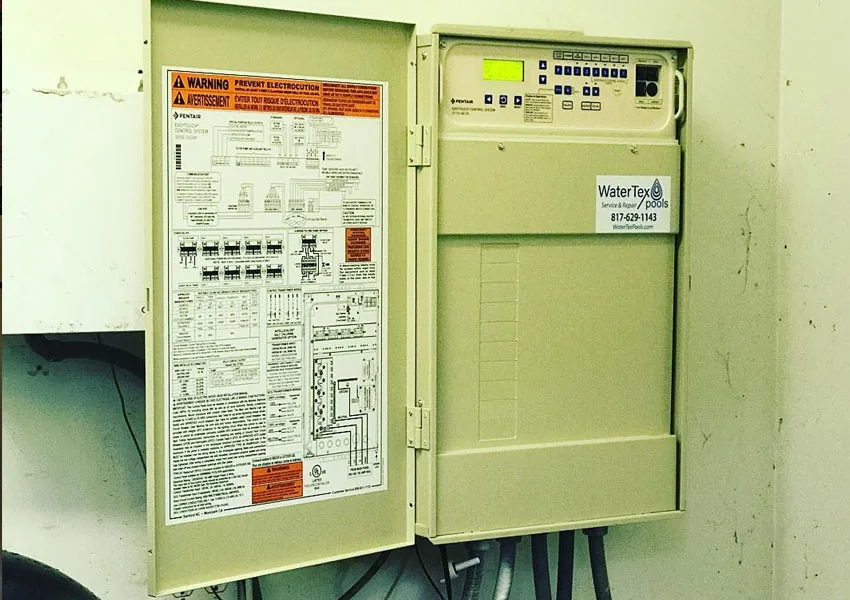
Automation is the part homeowners are most reluctant to call about, usually because the problem seems small. A schedule that will not hold, an app that cannot find the system, a valve actuator that turns the wrong way, or a panel that has to be reset to do anything are all worth fixing. See Pool Automation Repair for the systems we work on and what is usually behind it.
Green or Stained Water
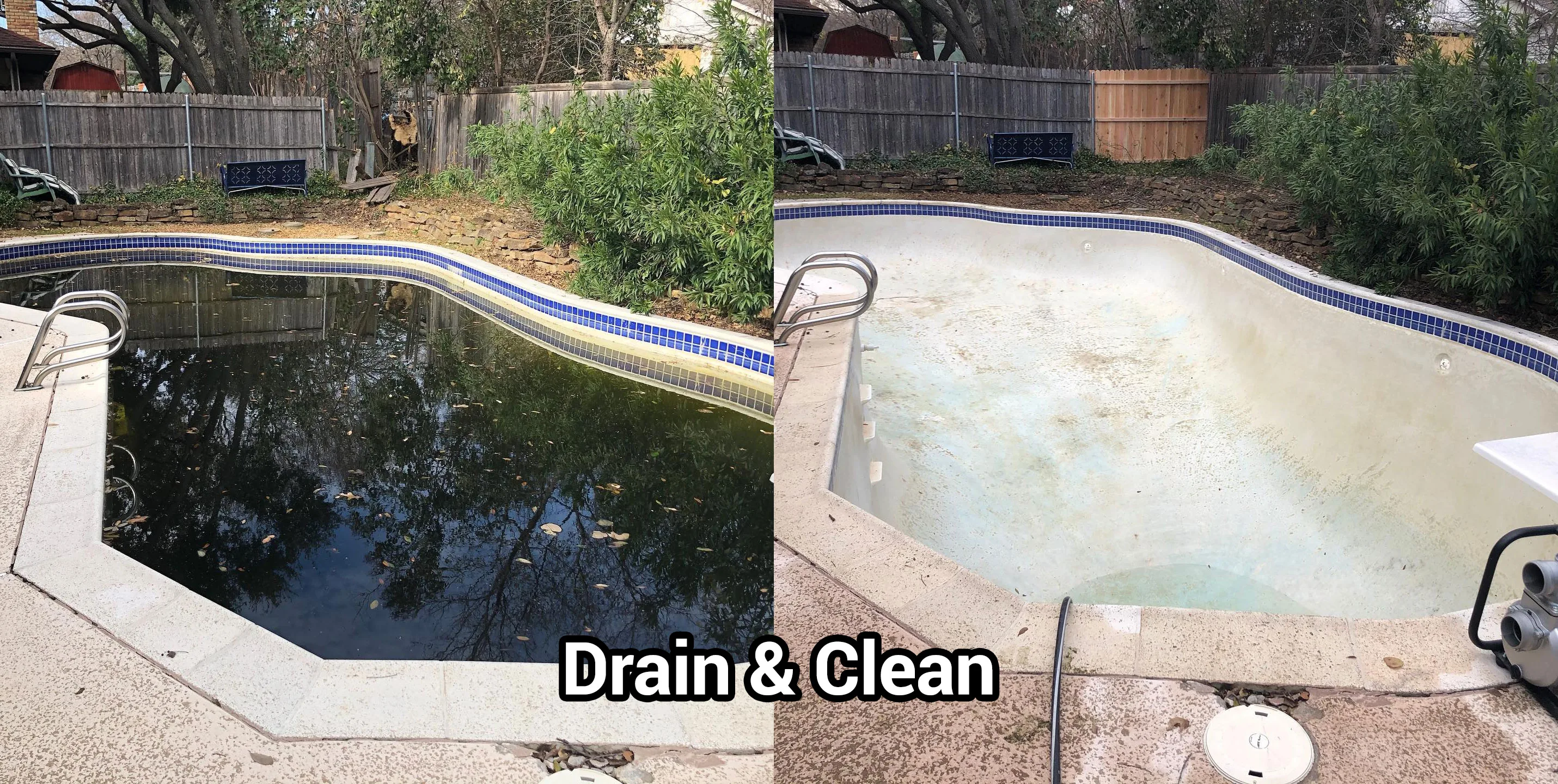
Some water problems cannot be fixed with chemicals. When stabilizer has built up over years, when a pool has been left to go green, or when staining and scale have set into the surface, draining and cleaning is the reset. Timing matters in North Texas, because an empty pool and saturated ground do not mix. See Pool Drain and Clean for when it is the right call.
Tile and Coping Problems
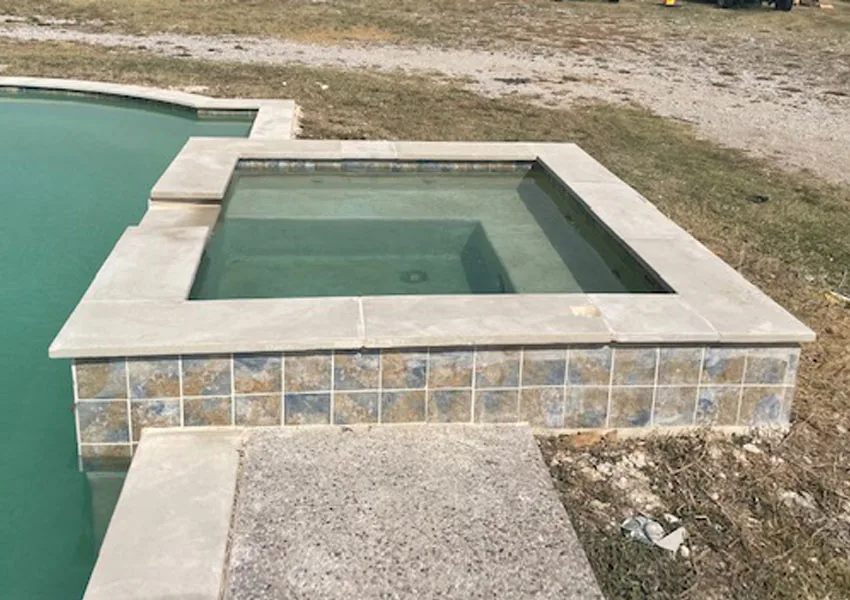
Tile and coping take the worst of the weather because they sit right at the waterline. Loose or missing tile, hollow sounding coping stones, cracked grout, and heavy calcium buildup all start small. Left alone, water gets behind the surface and the repair grows. See Pool Tile and Coping Repair for what we can restore and what needs replacing.
Pool Mastic Problems
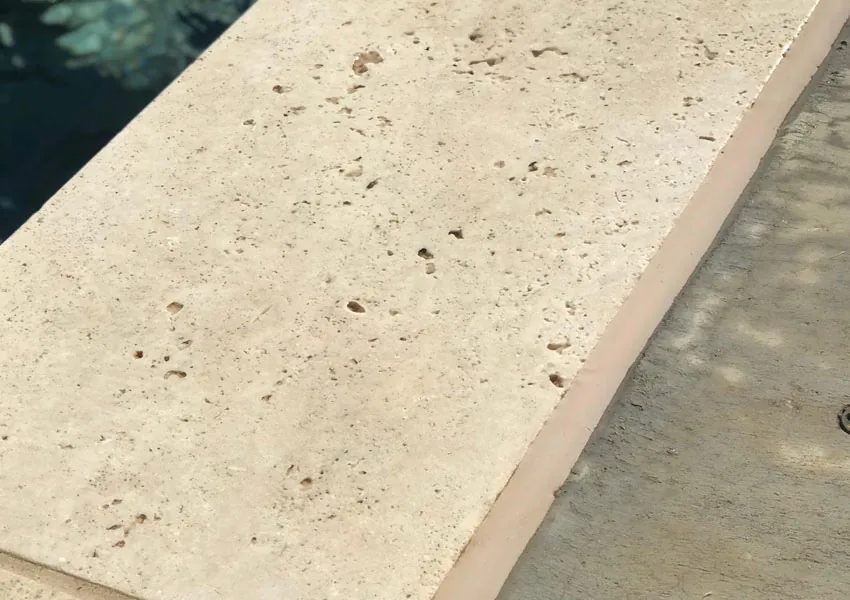
Mastic is the flexible seal in the joint between your pool deck and the coping. It is easy to overlook right up until it fails. Cracked, missing, or shrunken mastic lets water run straight into the joint, and in North Texas clay that water moves the deck. Replacing it is inexpensive. Repairing what happens after it fails is not. See Pool Mastic Repair for what the job involves.
Pool Surface Problems
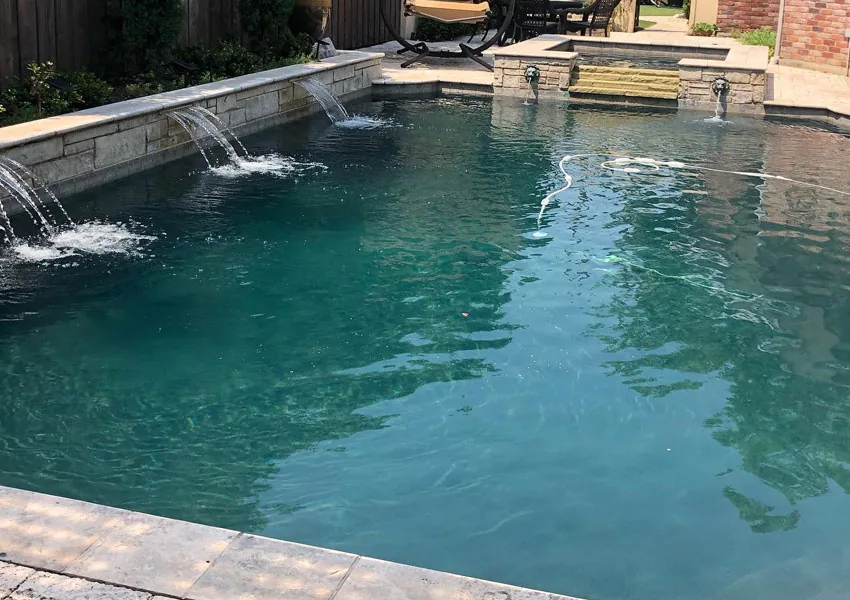
Plaster does not last forever. Rough patches that catch your feet, staining that will not brush out, chips around the steps, or a surface gone thin and blotchy all point the same direction. Most pools need resurfacing every ten to fifteen years, and North Texas water chemistry does not extend that. See Pool Resurfacing for the options and how long each one lasts.